
Metal Roofing in the Portland Metro Area
Metal roofing in the Portland metro area is a roofing system built from steel, aluminum, or copper panels fastened over a solid deck, widely considered the most permanent, longest-lasting roofing material available, with fire resistance and a low to nonexistent maintenance cycle depending on the product. Across the greater Portland metro — from Hillsboro and Beaverton in Washington County to Gresham and Happy Valley in Clackamas County — roughly 36 inches of annual rainfall concentrated between October and May, combined with wildfire ember risk in late summer and the region’s position in the Cascadia seismic zone, makes the material’s light weight, fire rating, and moss resistance especially valuable compared with heavier or more flammable alternatives. Reliance Roof Pros installs and repairs metal roofing throughout the Portland metro area, with particular experience in Lake Oswego and West Linn, where steep, tree-covered lots put constant moisture and debris pressure on roofing materials. As a locally owned company serving the Portland metro since 1996, we know which panel profiles, coatings, and underlayment details hold up under Pacific Northwest conditions.
Understanding Metal Roofing
Metal roofing comes in a surprising number of forms, from architectural standing seam panels and smooth pressed-aluminum shingles to granulated steel panels, through-fastened agricultural panels, and premium copper. Quality systems can serve well past 70 years, and metal is typically fire resistant or fireproof, which is why some home insurance companies reduce rates for metal roofs. It is also recyclable if it’s ever removed, and some homeowners use metal roofs as a rainwater catchment surface, since asphalt oils are a concern for gardeners who collect roof runoff.
Metal has long been used on Oregon barns and agricultural buildings, but residential adoption across the Portland metro grew steadily from the 1990s onward as homeowners in communities like Beaverton, Tigard, and Oregon City looked for an alternative to cedar and composition roofs that struggled with moss, rot, and fire risk. Today, metal appears on newer custom homes in Happy Valley and Lake Oswego, on hillside and rural properties around Damascus and Rhododendron, and on commercial and light industrial buildings throughout Washington and Clackamas counties. It remains a minority of the market compared with asphalt composition, but its share has climbed noticeably since the September 2020 wildfires pushed fire resistance to the front of many homeowners’ priorities.
The primary advantage of metal is longevity combined with fire resistance and very low maintenance. The tradeoffs are higher upfront cost than composition shingles and a wide quality gap between products: panel thickness, flashing details, and paint finish vary enormously, and the simpler details that save money at installation can lead to leaks and maintenance problems in the Pacific Northwest’s climate. Understanding those differences is critical, because they decide both longevity and your bottom-line cost.
Why Portland Homes Need Professional Metal Roofing
The Portland metro area’s mix of persistent moisture, seismic risk, wildfire exposure, and occasional temperature extremes makes both the decision to install metal and the quality of its installation unusually consequential here.
Moss, Debris, and Constant Moisture
The Mechanism: The metro’s wet season keeps roofs damp from October through May, and the Douglas fir needles, bigleaf maple leaves, and cedar debris common in older neighborhoods build up in valleys and along edges, holding moisture against the roof surface. Smooth, non-porous metal such as standing seam sheds water and gives moss little to anchor into, but textured or granulated metal panels can create the same crevices moss loves, and debris trapped in valleys and behind penetrations can hold water against seams and flashing for months on any metal roof.
Symptoms: Green moss patches along panel edges and in valleys, staining beneath trapped debris, and corrosion beginning where fasteners or cut edges stay wet.
Portland Metro-Specific Factors: Heavily wooded properties in Lake Oswego and West Linn see the most debris accumulation, which is why panel choice, valley design, gutter protection, and corrosion-resistant finishes matter more on those roofs than on open lots in Hillsboro or Tualatin.
Wildfire Embers and Smoke Events
The Mechanism: The September 2020 Labor Day wildfires sent smoke across the entire Portland metro and put embers and ash on roofs well beyond the burn zones, a reminder that Oregon’s fire risk no longer stops at the forest edge. Metal panels are typically fire resistant or fireproof and don’t ignite from airborne embers the way cedar shake or debris-covered composition roofs can.
Symptoms: Not damage so much as exposure: ash and debris collecting in valleys and gutters after smoke events, and embers lodging in roof-edge gaps where combustible material has accumulated.
Portland Metro-Specific Factors: Properties along the Mount Hood corridor near Rhododendron and on forested hillsides near Damascus and in the Clackamas County foothills carry the highest ember exposure, and insurers in those areas increasingly look favorably on noncombustible roofing.
Seismic Weight and Structural Load
The Mechanism: The Portland metro sits in the Cascadia Subduction Zone’s shaking footprint, and roofing weight matters in an earthquake because heavier roofs add mass high on the structure. Metal roofing typically weighs 1 to 1.5 pounds per square foot, compared with roughly 2 to 3 for composition shingles and 9 to 12 for concrete tile, which lowers the load on aging framing.
Symptoms: Older homes with sagging rafters or overloaded framing from multiple layers of prior roofing, which metal can often be installed over safely once the old layers are removed and the deck is verified.
Portland Metro-Specific Factors: Pre-1960 homes in older Portland neighborhoods, Milwaukie, and Lake Oswego, where original framing may already carry the weight of one or two previous reroofs, benefit most from the weight savings.
Ice, Wind, and Heat Extremes
The Mechanism: The February 2021 ice storm coated roofs and trees across the metro in heavy ice, and the June 2021 heat dome pushed temperatures to a record 116°F, while east wind events funnel through the Columbia River Gorge into Troutdale and Gresham. Metal roofing handles all three, but ice and snow can slide off in sudden sheets, so snow guards and gutter strength need to be planned for, and reflective finishes help during extreme heat.
Symptoms: Bent gutters and damaged landscaping below roof edges after ice sheds, and panel flutter or lifted edges where wind-rated fastening wasn’t specified.
Portland Metro-Specific Factors: Gorge-exposed properties in Troutdale and Gresham need enhanced wind detailing at eaves and rakes, while Rhododendron’s heavier snowfall makes snow retention a standard part of the design.
Signs You Need Metal Roofing
Exterior Signs
- Moss and debris repeatedly returning on a composition or cedar roof despite treatment
- Cedar shakes that are splitting, rotting, or curling after decades of wet seasons
- Visible granule loss and brittle composition shingles approaching 20 to 25 years of age
- Existing metal panels with rust at seams, cut edges, or fastener points
- Leaking or loose gasketed screws on a through-fastened metal roof
Interior Signs
- Water stains on ceilings during the October through May wet season
- Condensation or dampness on the underside of existing metal decking in the attic
- Musty odors suggesting moisture trapped beneath the roof
Portland Metro-Specific Signs
- A home in a wildfire-adjacent area — such as the Clackamas County foothills or the Mount Hood corridor — where embers are a real concern
- An HOA or insurer encouraging a noncombustible roof
- Rising energy bills where a reflective metal finish could reduce summer heat gain
Call right away if you see active leaking, sagging sections, or a roof damaged by falling limbs, since the metro area’s long wet season turns small openings into interior damage quickly.
Architectural Standing Seam Metal
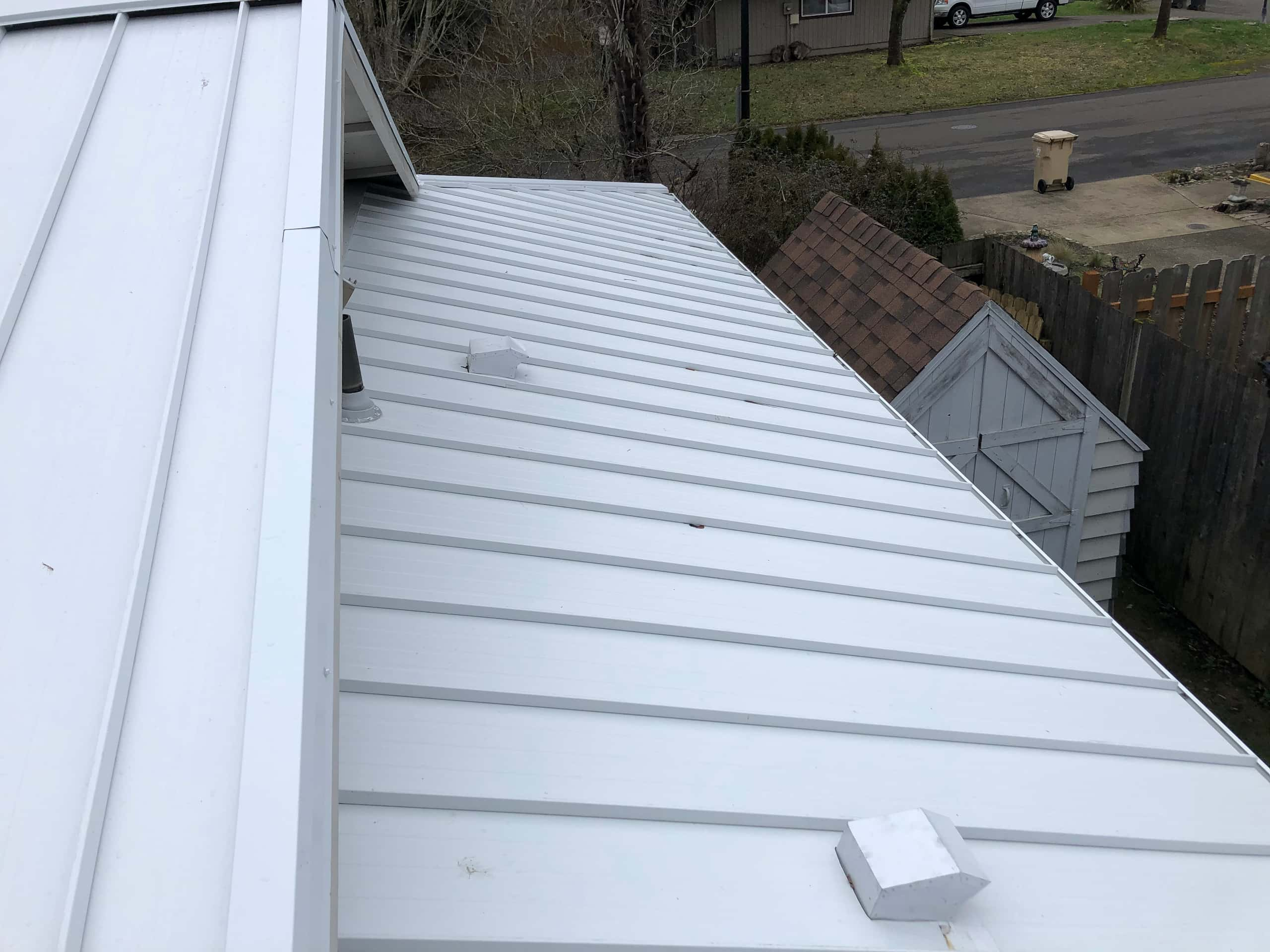
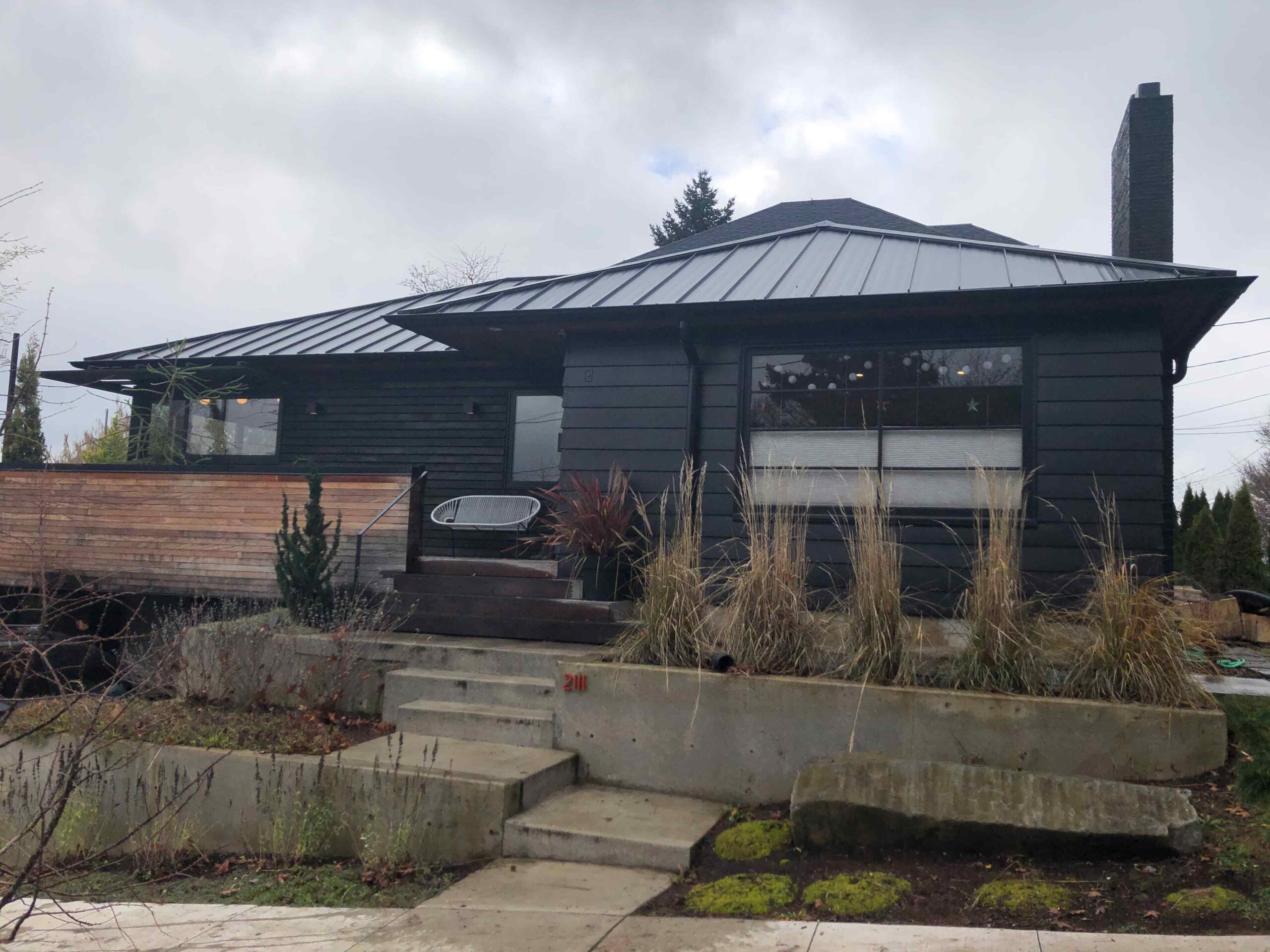
Known for a clean appearance and almost zero maintenance, standing seam uses panels that run from the bottom of the roof to the top with fasteners concealed beneath the panel, away from sunlight, which minimizes any chance for water to enter. Not all standing seam is equal: panels come in different metal thicknesses with different expansion and contraction rates, and some simple, cost-saving flashing details can lead to long-term leaks in our climate. Paint finish matters just as much, since advanced finishes can last a lifetime while older, simpler finishes fade and peel. This is our most-installed metal system for custom homes throughout Lake Oswego, Happy Valley, and the broader Portland metro area.
Smooth Metal Shingles
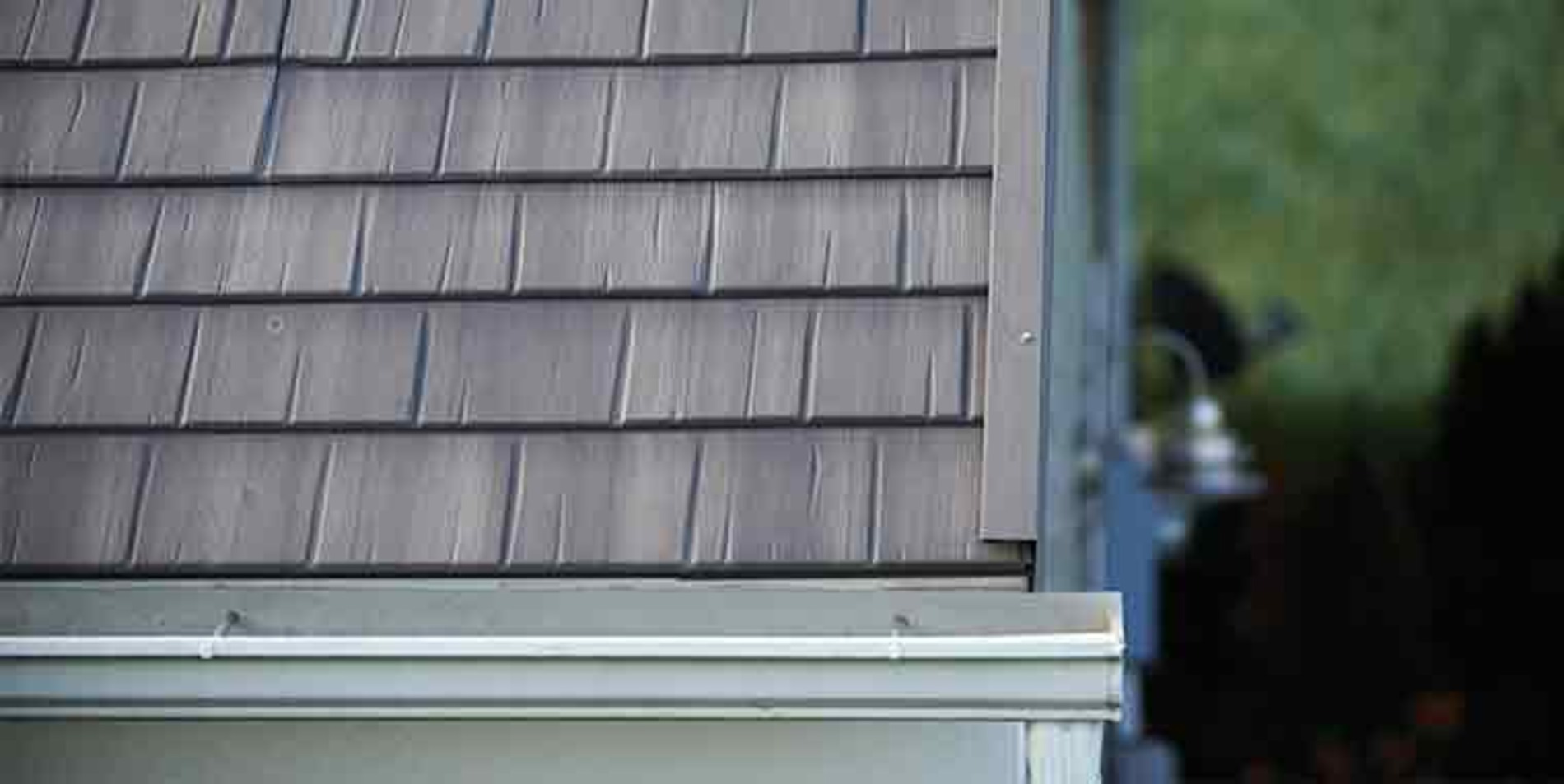
Usually pressed aluminum with a paint finish, molded to resemble slate, shake, or asphalt. We install some types but caution clients about them here, because the cracks and crevices in some products foster moss growth in our wet climate, the thin metal can dent when walked on so most companies won’t service them, and the way panels lock together can have weaknesses in our environment.
Through-fastened Metal Roofing
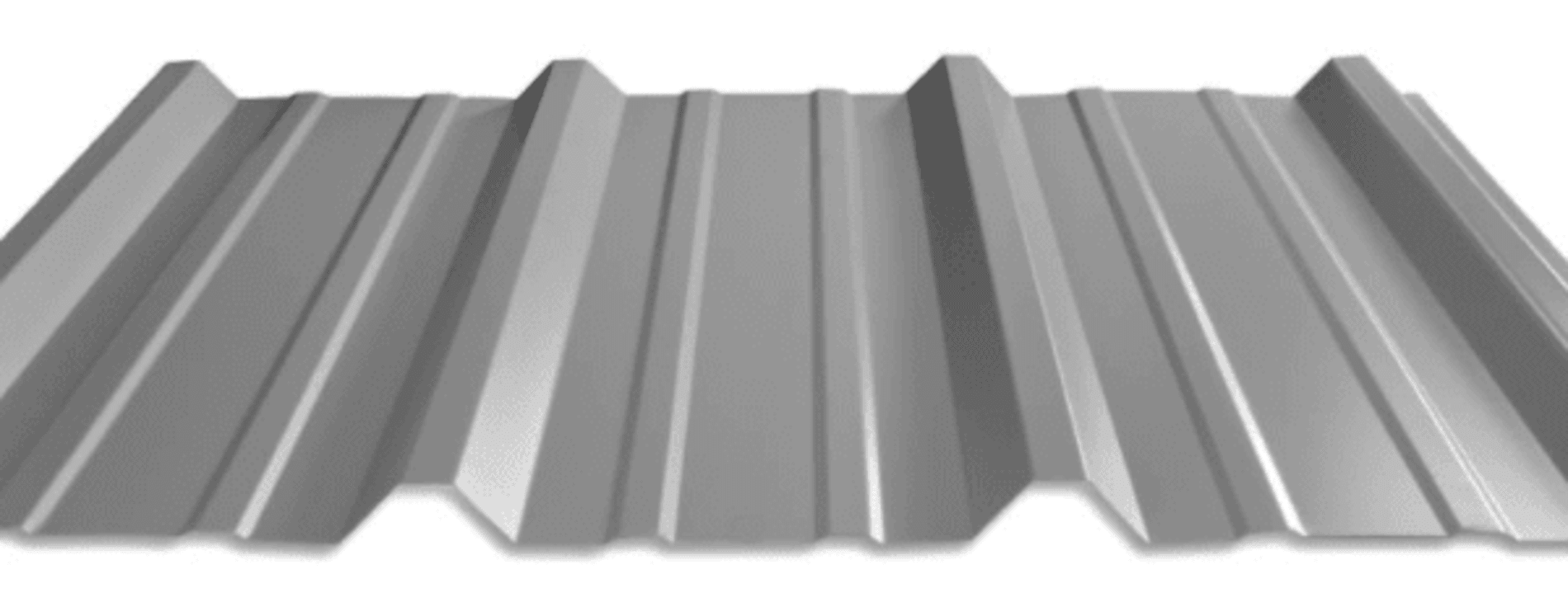
Also called agricultural or “ag” panels, these ribbed panels typically come in 3-foot-wide sections held down by gasketed screws driven through the face of the roof. Over time those gaskets break down from sun and heat and the fasteners leak, so we do not install this system on any occupied building and consider it acceptable only for outbuildings, though we will service and repair existing through-fastened roofs throughout the Portland metro area.
Granulated Metal Roofing Panels
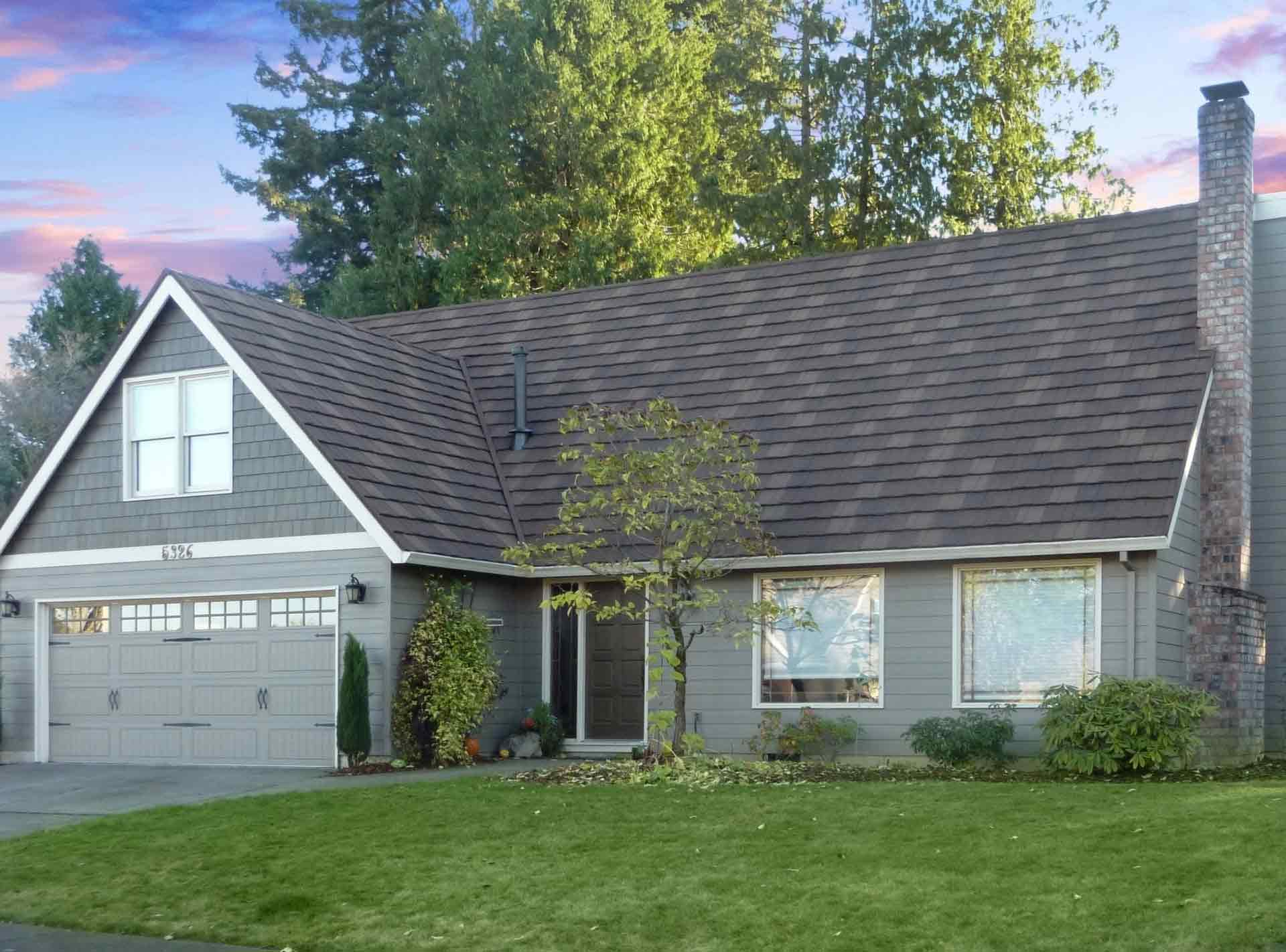
Pressed galvanized steel panels that resemble composition, shake, slate, or tile, combining varied styles with steel’s durability and excellent fire resistance. The best manufacturers use thicker gauge steel, a high-end baked-on acrylic resin, and embedded ceramic granules. They often cost more than standing seam, and their rough texture can create a moss-nurturing surface — a real concern across the wetter, tree-lined communities of the metro; we’ve seen pressure washing strip the acrylic and granules while trying to remove aggressive moss.
Copper
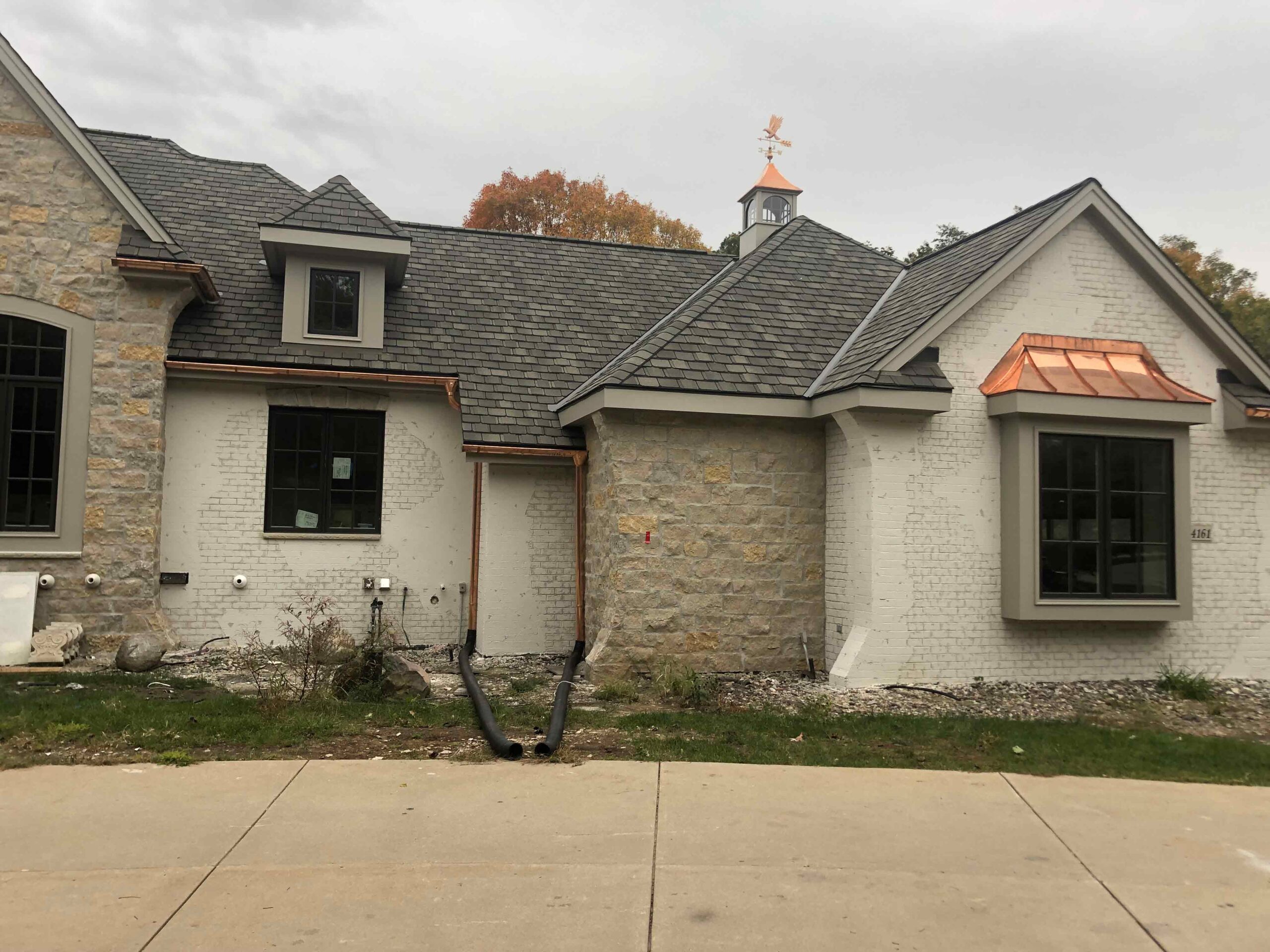
Among the most beautiful and premium roofs, lasting indefinitely when installed properly, and naturally moss-proof because copper kills moss and microbial growth. It’s most often seen as standing seam on churches and civic buildings throughout the Portland metro area, though some clients add copper accents to premium or premium designer asphalt roofs. Copper weathers from shiny metal to dark bronze and eventually the green patina seen on landmark buildings, a finish we can help you achieve.
Why Portland Property Owners Choose Reliance Roof Pros
Reliance Roof Pros has served the Portland metro area since 1996, which means we’ve watched how metal, cedar, and composition roofs actually age under Pacific Northwest rain, moss, and temperature swings — from Beaverton and Hillsboro in Washington County to Oregon City and Happy Valley in Clackamas County. We install architectural standing seam, granulated panels, copper, and select smooth metal shingles, and we tell you plainly when a product isn’t a good fit for our climate, which is why we won’t install through-fastened panels on an occupied home. Our crews pay close attention to condensation control, valley detailing, and wind-rated fastening, the details that decide whether a metal roof performs for decades or leaks in its third winter. We back every installation with a workmanship warranty, and because we’re locally owned, we handle permits and follow-up directly across Portland, Lake Oswego, West Linn, Tigard, Milwaukie, Tualatin, and the surrounding communities.